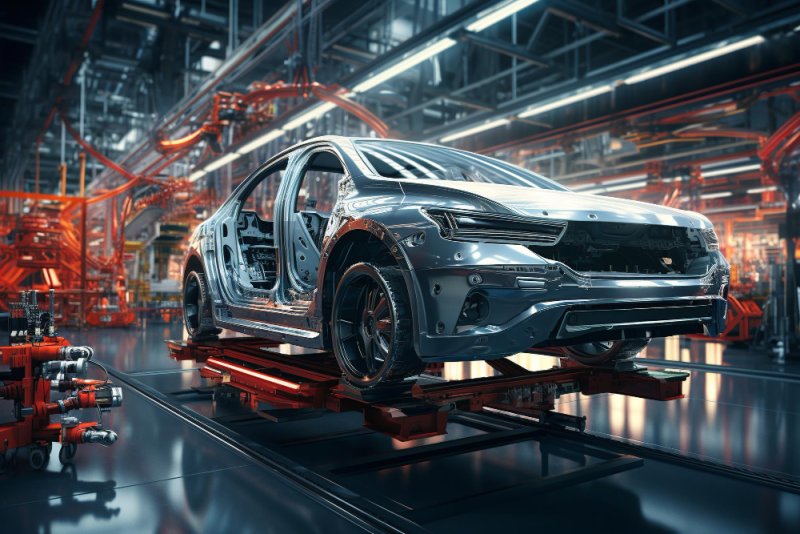
Automotive manufacturing is a multi-layered process where thousands of components are assembled in a highly synchronized manner. This structure demands production infrastructures that are not only fast but also flexible and reliable.
Automotive production lines often operate continuously around the clock. This intensive pace requires auxiliary machinery to deliver stable, long-term performance. Even millisecond-level delays can have a measurable impact on overall production capacity.
Quality standards such as IATF 16949 and ISO 9001 influence not only final products but also the equipment used in automotive manufacturing. Auxiliary machinery must comply with these standards in terms of repeatability, process control, and traceability.
Auxiliary machinery forms the supporting infrastructure that enables primary production systems to operate efficiently. In the automotive sector, these machines are among the most critical yet often unseen components of the production line.
Part feeding, positioning, and fastening systems reduce human intervention on assembly lines, significantly lowering error rates. This structure improves product quality while strengthening workplace safety.
Functional test stations and quality control equipment enable product verification at every stage of production. Integrating auxiliary machinery into testing processes allows defective products to be identified at an early stage.
Our company goes beyond the concept of standard products when delivering solutions to the automotive sector. Each project is handled with a customized approach based on the specific dynamics of the production line.
Existing production line structures, cycle times, and bottlenecks are analyzed in detail. Auxiliary machinery is then designed to enhance process efficiency based on these findings.
Developed systems can be seamlessly integrated into existing automation infrastructures and industrial control systems. This approach accelerates commissioning and minimizes production interruptions.
Competitive advantage in the automotive industry is largely driven by the level of automation and digitalization. Auxiliary machinery plays a crucial role in this transformation.
PLC-based control architectures and sensor integrations enable auxiliary machines to provide real-time data from the production process. This data supports continuous monitoring and performance analysis.
Collected operational data is used to reduce cycle times and optimize maintenance planning. This approach directly contributes to minimizing unplanned downtime.
Automotive production environments involve high mechanical loads and intensive usage conditions. Therefore, durability and maintenance accessibility are critical factors for auxiliary machinery.
High-strength materials and components compliant with industrial standards ensure stable machine performance over extended operational lifetimes.
Modular design principles accelerate maintenance and component replacement processes. This reduces maintenance durations and improves production line availability.
Electric vehicles, autonomous driving systems, and lightweight materials are fundamentally transforming automotive production processes. This evolution requires auxiliary machinery to adapt accordingly.
Next-generation automotive production lines require systems capable of quickly adapting to different product variants. Flexible auxiliary machinery directly addresses this requirement.
Digital traceability, predictive maintenance, and smart manufacturing concepts are becoming standard in automotive facilities. Compatibility of auxiliary machinery with these infrastructures significantly enhances competitiveness.
Our company aims to strengthen production processes through engineering solutions tailored to the high-speed, quality-driven nature of the automotive industry. With a focus on long-term partnerships, we continue to deliver reliable and forward-looking solutions that support the evolving needs of automotive manufacturers.