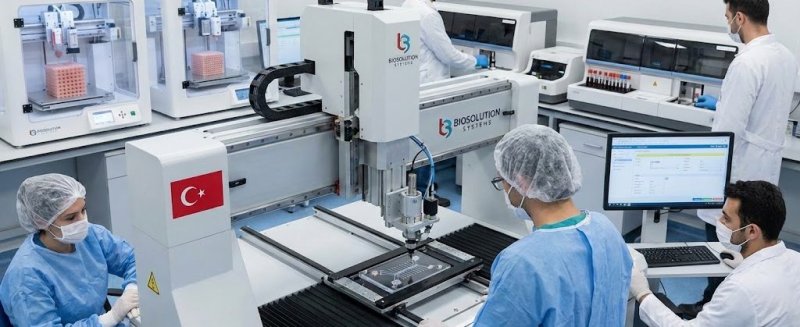
Healthcare environments rely on uninterrupted machine performance, and integrated infrastructures play a key role in maintaining operational stability. MRI scanners, CT units, infusion pumps, anesthesia machines, ventilators and automated sterilization systems must operate with minimal deviation to match rising patient volumes. When integrated through unified digital platforms, these devices provide synchronized data streams, cross-system communication and consistent operational patterns. Studies show that integrated machine fleets reduce workflow delays by up to 25%, primarily by eliminating manual coordination gaps and enabling early detection of device failures. Scalable architectures also allow hospitals to expand capacity during peak periods without compromising process accuracy.
Advanced imaging machines form the diagnostic backbone of modern medicine. They provide high-resolution anatomical and functional information that supports early detection, precision treatment planning and accurate monitoring of disease progression. Over the past decade, imaging systems have undergone significant evolution: MRI platforms now achieve up to 20% better signal-to-noise ratios, low-dose CT scanners reduce radiation levels while maintaining image sharpness, and AI-supported reconstruction algorithms accelerate scan times by nearly 30%.
High-field MRI and multi-slice CT units enable detailed visualization of tissues, vasculature and skeletal structures. Their enhanced gradient systems, improved coil arrangements and fast acquisition sequences allow clinicians to detect subtle abnormalities long before symptoms manifest. Real-time image processing pipelines also support interventional radiology, enabling precise navigation during minimally invasive procedures.
PET-CT, PET-MRI and SPECT systems combine anatomical and metabolic data to identify complex pathophysiological patterns. These hybrid models are particularly valuable in oncology, cardiology and neurology, offering early identification of tumor activity, myocardial viability and neurodegenerative markers. Functional imaging improves diagnostic accuracy by showing real-time organ activity rather than relying solely on structural insight.
Robotic surgical systems represent one of the most transformative machine solutions in healthcare. Global adoption rates exceed 10% annual growth, driven by the consistent advantages robots deliver in precision, safety and recovery outcomes. Their mechanical stability, tremor reduction capabilities and extended range of motion allow surgeons to perform complex procedures with millimetric accuracy.
Robotic instruments translate surgeon movements into micro-scale actions, improving the control of delicate structures. Visual systems integrated into robotic platforms offer magnified, high-contrast fields that reduce the risk of tissue damage. This is particularly important in cardiac, neurological, urological and gynecological surgeries, where exact boundaries must be preserved.
Robotic platforms enhance operating room efficiency by coordinating instrument readiness, visual feeds, ergonomic positioning and data-driven support modules. Integrated navigation systems and digital overlays guide surgical decisions with real-time feedback. As operations become more predictable and consistent, postoperative recovery durations shorten, and complication rates decline.
Automation systems reshape clinical operations by accelerating repetitive tasks, enforcing standardized quality protocols and minimizing variability in test processing. Automated specimen handling alone can shorten laboratory turnaround times by 30%, enabling faster diagnosis and earlier treatment initiation.
High-throughput analyzers conduct hematology, immunology, biochemistry and molecular tests with exceptional consistency. Modern platforms can deliver 600+ assays per minute, ensuring reliable data even in high-volume hospital environments. Automated conveyor lines, sample decappers, barcode readers and integrated quality control modules eliminate manual errors and maintain traceability.
Automated dispensing cabinets and pharmacy robots ensure correct dosing, reduce storage errors and track medication usage patterns. In sterile processing, advanced autoclaves and plasma sterilizers monitor cycle parameters digitally, ensuring that instruments meet stringent hygiene standards.
Sensors embedded within healthcare machines provide real-time feedback on pressure, temperature, biochemical concentrations, electromagnetic values and patient-specific physiological changes. With processing speeds under 10 milliseconds, sensor systems enhance safety and enable immediate corrective adjustments.
- Intensive care monitors
- Infusion pumps
- Ventilators
- Biopsy guidance systems
- Smart rehabilitation machines
These devices depend on strict calibration routines, as accurate sensing can reduce error margins below 0.5%. Intelligent self-testing modules further minimize downtime and support predictive maintenance strategies.
Sterilization machines are central to reducing hospital-acquired infection risks. WHO data indicates that effective sterilization can reduce postoperative infection likelihood by up to 40%. Modern autoclaves, low-temperature sterilizers and hydrogen-peroxide plasma systems deliver efficient cycles with optimized energy and water consumption. Automated cycle documentation enhances traceability and compliance with international hygiene standards.
Autonomous mobile robots are gaining widespread use in hospital logistics. These robotic carriers transport medications, samples, linens, sterile equipment and medical waste with consistent timing and enhanced safety. Navigation sensors detect corridor traffic patterns and optimize routes dynamically. Research shows that logistics robots can reduce manual transport workloads by approximately 25%, allowing staff to focus on direct patient care.
- Reduced human handling of critical materials
- More predictable delivery cycles
- Lower contamination risk
- Automated route planning
- Real-time tracking and reporting
Such systems contribute to a more organized, scalable and resilient hospital infrastructure.
Large medical machines consume considerable energy, particularly MRI and CT units. Improved cooling systems, power-optimized circuits and standby-mode intelligence can reduce energy consumption by 10–20%. Smart energy management platforms monitor real-time usage, detect inefficiencies and balance power loads across departments. These practices extend equipment life cycles and decrease total cost of ownership, while supporting sustainability goals.
Hospitals generate enormous data volumes, with imaging departments alone producing up to 400 GB per day. Effective machine solutions require integration with PACS, RIS, cloud systems and cybersecurity frameworks. AI analytics interpret the data for anomaly detection, workflow prediction and automated triage. Machine learning-driven maintenance tools analyze system performance logs to detect early failure indicators, minimizing downtime and service disruptions.